The Rube Goldberg Machine of Good Intentions: Auditing Your Non-Profit’s Tech Stack

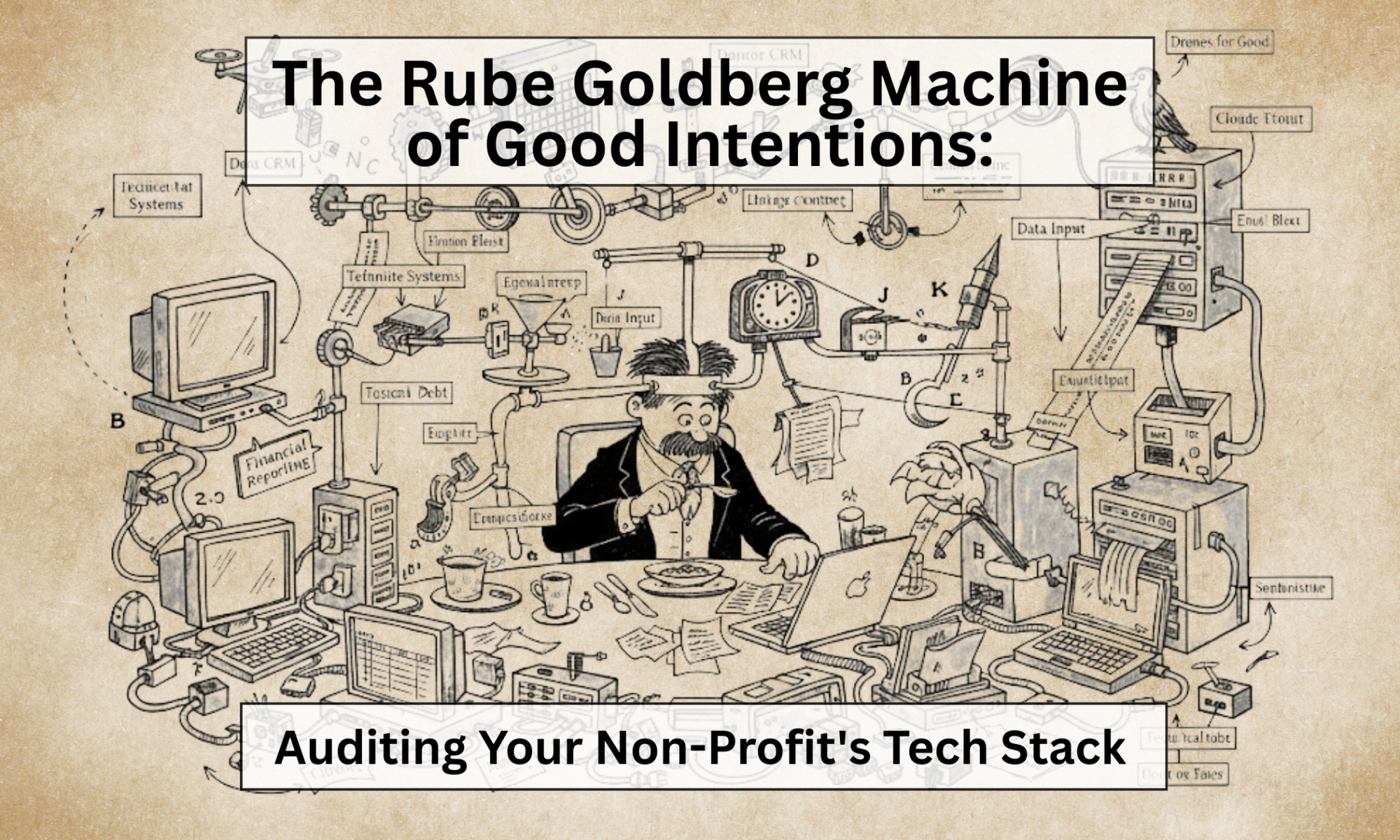
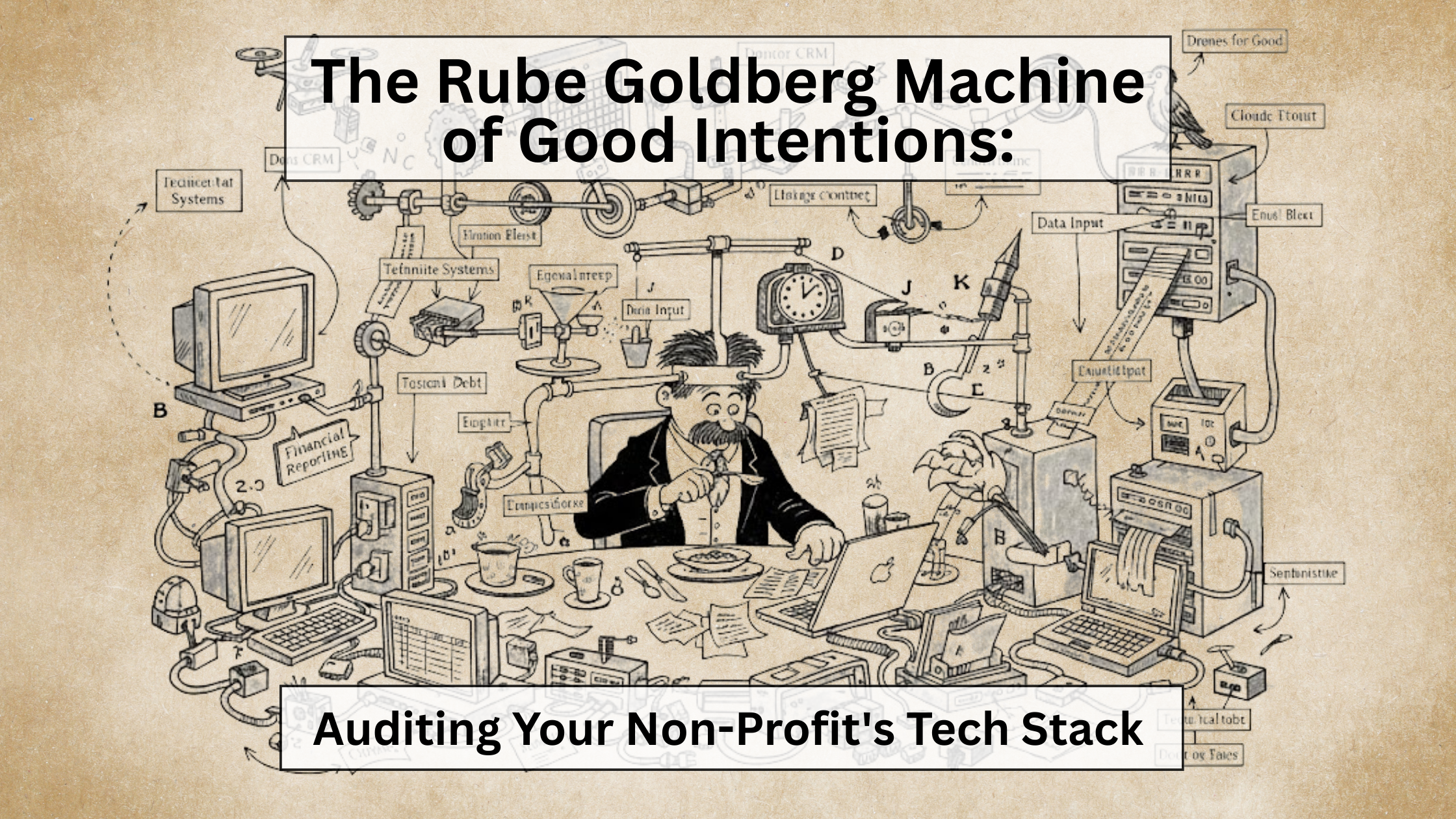
A well-meaning donor clicks “submit” on a $50 contribution, setting off a sprawling, invisible chain reaction. The digital coin drops down a chute into a siloed payment processor, which flings an unformatted email into the void, prompting a frantic development associate to manually export a spreadsheet, which ultimately triggers a mismatched, automated “Nice to meet you!” email to a benefactor who has supported your mission for a decade. This isn’t a strategy; it’s a Rube Goldberg machine of good intentions. It is an exhausting, intricate dance that eventually drops the ball, proving that a bloated technology stack isn’t merely a line-item liability—it is an active barrier to cultivating authentic human relationships.

When our systems are fractured, our empathy is inevitably compromised. Fragmented data yields a fragmented donor experience. The emotional core of philanthropy relies on recognition, continuity, and trust; chaotic software blindfolds your organization, preventing you from truly “seeing” your supporters. You cannot foster a sense of belonging when your left hand has no idea what your right hand is processing.

The imperative here is a profound psychological pivot: moving away from the reactive “tool-buyer” mentality—the desperate, ad-hoc acquisition of software to patch immediate leaks—and stepping fully into the mantle of a “Digital-First Leader.” It requires viewing your digital architecture not as a necessary evil or administrative burden, but as the very circulatory system of your mission.

Step 1: The Complete Tech Inventory

Before one can dismantle the machine, one must catalog its sprawling, chaotic components. It is deeply tempting to begin slashing software costs immediately, driven by the sheer, visceral anxiety of high administrative overhead. Yet, true organizational stewardship demands that we first document the present reality without judgment. You must establish a master ledger—a panoptic, unsentimental view of every singular tool currently occupying space in your digital ecosystem.

This inventory requires forensic precision. It is entirely insufficient to simply list “Mailchimp” and “Salesforce” on a whiteboard. A rigorous audit captures the granular, operational realities: What is the exact annual cost? When does that quiet, auto-renewing subscription trigger? More importantly, who is the actual technical steward—the lone individual who holds the metaphorical administrative keys to the kingdom?

Finally, one must confront the chasm between intention and reality by scrutinizing a tool’s primary function. What was a platform purchased to do, versus what is it actually doing? Uncovering this delta often reveals tragicomic realities: expensive, enterprise-grade software that was acquired to orchestrate complex marketing campaigns, currently being utilized merely to store a handful of static email addresses.

Step 2: Mapping the Donor Data Flow

Data silos are the silent antagonists of modern philanthropy. They are the locked, windowless rooms within your organizational architecture where valuable insights go to languish in isolation. To combat this, we must map the circulatory pathways of your information. Imagine, if you will, tracing the perilous, step-by-step journey of a single $50 online donation from inception to acknowledgment.

Does this digital token of goodwill glide effortlessly from the initial donation form, seamlessly populating your Customer Relationship Management (CRM) database, and elegantly triggering a personalized acknowledgment via your email marketing platform? Or does its journey halt abruptly, requiring the brute-force intervention of a staff member manually migrating comma-separated values (CSV) from one platform to another? Manual intervention is the friction that burns out passionate teams.

This mapping phase demands a critical interrogation of your integration middleware—the invisible translators that allow disparate software languages to communicate. Are your systems speaking fluently through native integrations built by the original developers, or do you require an Integration Platform as a Service (iPaaS)—such as Zapier or Make—to act as the diplomatic envoy between stubborn platforms? Bridging these communication gaps is paramount. Before embarking on this mapping, ensure your team is grounded in Data-Driven Fundraising Basics.

Step 3: Identify Redundancies and Low Adoption

As we audit the machinery, we must extend profound empathy to the humans tasked with operating it. When leadership discovers low adoption rates for a particular software, the knee-jerk reaction is often to blame the user’s resistance to change. However, staff members typically abandon tools not out of malice or incompetence, but because they are drowning in cognitive overload and lack adequate training. The tool may not be inherently flawed; it simply arrived without a compass or context.

To clarify this landscape, we must construct an evaluation matrix to illuminate redundancies—the digital equivalent of paying two different orchestras to play the same symphony in adjacent rooms. Are you dutifully paying a premium for a dedicated email marketing service, whilst simultaneously possessing robust, completely untapped email capabilities dormant within your primary CRM?

Consider the margins and the unseen leaks. Are exorbitant event registration fees quietly eroding the financial impact of your annual gala on a third-party ticketing site, entirely negating the fact that your existing database possesses a native, underutilized event module? Identifying these functional overlaps allows you to prune the dead branches, directing vital financial nutrients back to the core trunk of your mission.

Step 4: Consolidation and Tool Recommendations

The culmination of this audit is not merely a leaner budget spreadsheet; it is the intentional architecting of a unified system that champions the “MarTech for Good” ethos. With redundancies exposed and data pathways illuminated, the path forward branches into two distinct, strategic philosophies of consolidation.

The first is the “All-in-One Approach,” an elegant solution particularly suited for emerging or mid-sized organizations. This involves embracing unified platforms designed to synchronize fundraising, event management, and donor relations under a single, cohesive roof. Tools operating within this paradigm eliminate the need for complex digital duct tape, offering a streamlined simplicity that allows your team to focus on relationship-building rather than troubleshooting API errors.

Conversely, mature organizations with complex, multifaceted needs might favor the “Ecosystem Approach.” This philosophy anchors the digital architecture around a profoundly robust, central CRM—the undisputed, single source of truth. Any peripheral tools or third-party add-ons are then meticulously vetted for strict API compliance, ensuring they plug into the central nervous system flawlessly. Once this foundation is secure, and if your audit reveals gaps in how you speak to different supporter tiers, exploring Using AI for Donor Segmentation becomes your logical, high-impact next frontier.
Stop Juggling Chainsaws! How AI Agentic Workflows Give Marketing Directors a Superpowered Third (and Fourth, and Fifth) Arm

Stop Juggling Chainsaws! How AI Agentic Workflows Give Marketing Directors a Superpowered Third (and Fourth, and Fifth) Arm

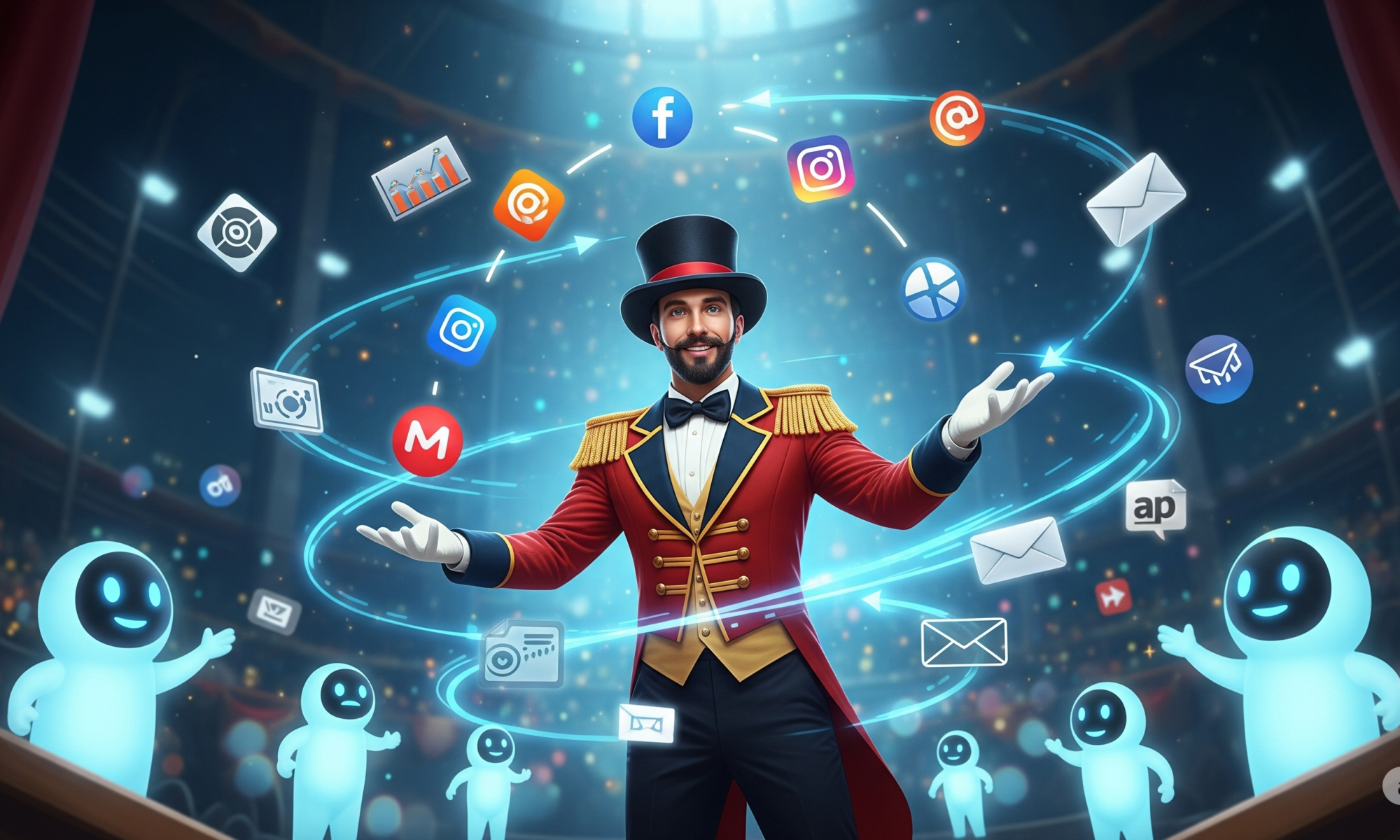
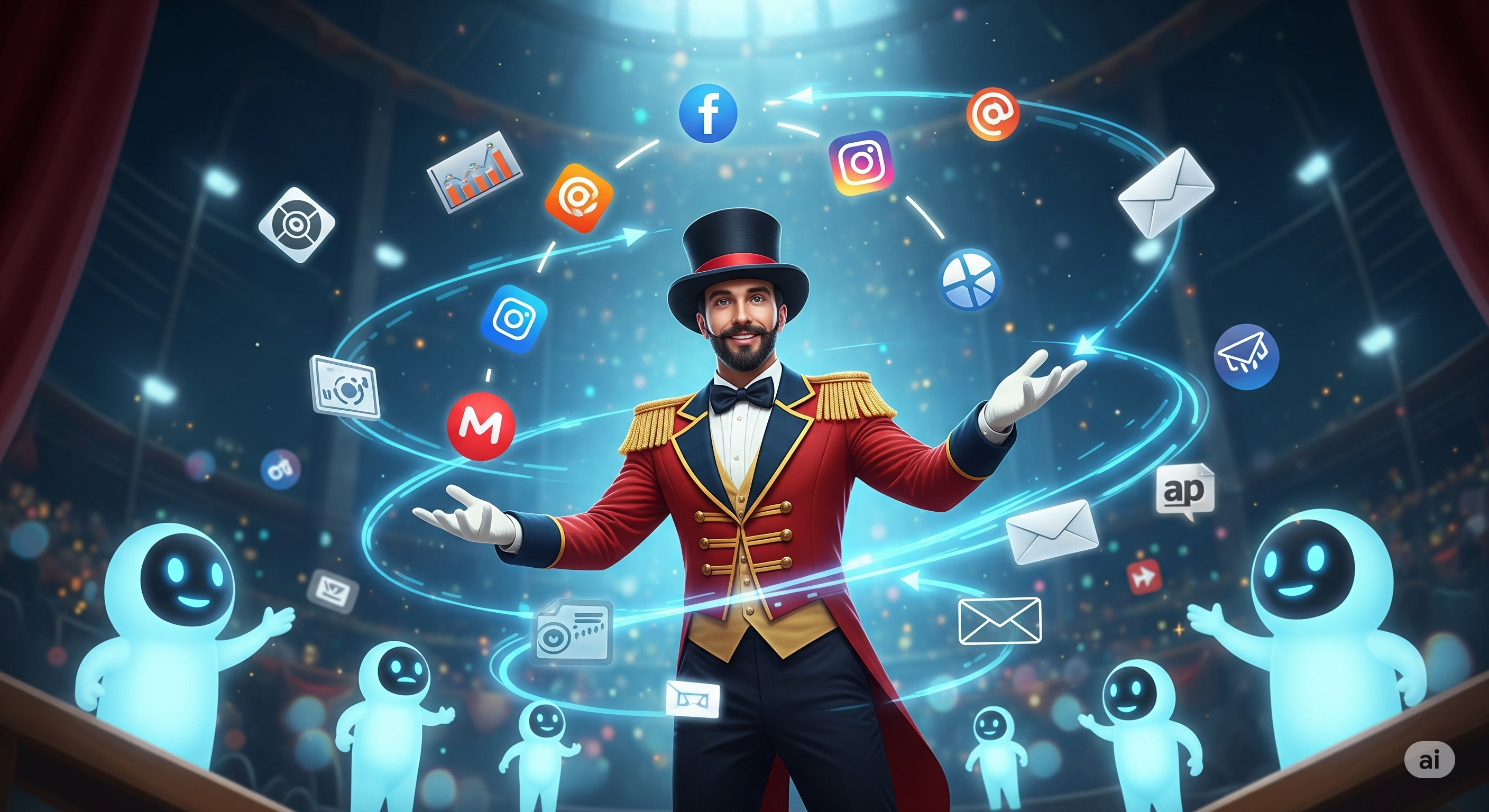
Okay, Director of Marketing, let’s be honest. Some days, doesn’t your job feel less like strategic leadership and more like a chaotic circus act? You’re juggling flaming torches (new campaigns), spinning plates (social media), taming lions (competitor analysis), and trying to sell popcorn (actually, you know, your products/services) – all while keeping a smile plastered on your face for the audience (your CEO and sales team). It’s a lot.

What if I told you there’s a way to not just get more hands, but super-powered, intelligent, and endlessly energetic ones? Enter AI agentic workflows, your new favorite behind-the-scenes crew.

Think of yourself as the Ringmaster of this incredible marketing circus. You’ve got the vision, the strategy, the understanding of what wows the crowd. But instead of desperately trying to train a troupe of well-meaning but sometimes fumbling human assistants for every single task, you now have access to a team of highly specialized AI agents.

What in the Big Top are AI Agentic Workflows?

Imagine this: you need to launch a new product. Instead of manually briefing a writer, then a designer, then a social media manager, then an ads specialist, all while chasing approvals and collating feedback, you deploy an AI agentic workflow.

  • Your “Scout” Agent: This AI whiz kid dives deep into market research, competitor messaging, and current trends with lightning speed. It uncovers insights you’d spend weeks digging for, identifying the perfect audience and the watering holes where they congregate online.
  • Your “Wordsmith” Agent: Armed with the Scout’s intel, this agent drafts compelling ad copy, blog posts, email sequences, and social media captions, all tailored to different platforms and audience segments. It can even A/B test headlines faster than a speeding trapeze artist.
  • Your “Visionary” Agent: Need visuals? This AI can generate mood boards, suggest imagery, or even create initial design mockups for your campaigns, giving your human designers a fantastic head start.
  • Your “Scheduler” Agent: This ultra-organized agent takes all that brilliant content and schedules it across all your chosen platforms, ensuring optimal timing and reach. No more missed posts or frantic last-minute scrambles.
  • Your “Analyst” Agent: As the campaign runs, this agent diligently tracks performance metrics in real-time. It doesn’t just report numbers; it spots trends, identifies what’s resonating (and what’s flopping), and even suggests optimizations. It’s like having a data scientist who never sleeps and speaks plain English.

From Juggling Chainsaws to Conducting an Orchestra

With AI agentic workflows, you, the Marketing Director, transition from a stressed-out, multi-tasking juggler to a strategic conductor.

  • Be More Efficient? Absolutely. Repetitive, time-consuming tasks get automated. Your team is freed up from the grunt work to focus on higher-level strategy, creative brainstorming, and building those crucial human connections. Think of the hours reclaimed!
  • Be More Effective? You Bet. These AI agents are data-driven. They learn, adapt, and optimize based on real-time feedback. This means campaigns that hit harder, resonate deeper, and deliver better ROI. No more throwing spaghetti at the wall and hoping it sticks.
  • Achieve Pinpoint Personalization? It’s Here. Imagine crafting hyper-personalized customer journeys at scale. AI agents can help segment audiences with incredible granularity and tailor messaging accordingly, making your audience feel truly seen and understood.
  • Boost Creativity? Surprisingly, Yes! By handling the mundane, AI workflows free up your team’s brainpower for innovation. Plus, the insights and starting points generated by AI can actually spark new creative avenues you hadn’t considered.
  • Make Smarter Decisions, Faster? That’s the Goal. With comprehensive data and intelligent analysis at your fingertips, you can make informed strategic decisions with greater confidence and speed. No more gut feelings disguised as strategy.

The Future Isn’t Scary, It’s Efficient

Adopting AI agentic workflows isn’t about replacing your talented human team; it’s about augmenting them, empowering them to do their best work. It’s about transforming your marketing department from a frantic flurry of activity into a well-oiled, strategic powerhouse.

So, are you ready to put down the juggling chainsaws and pick up the conductor’s baton? It’s time to let AI agentic workflows help you orchestrate your most successful marketing performances yet. The crowd is waiting.

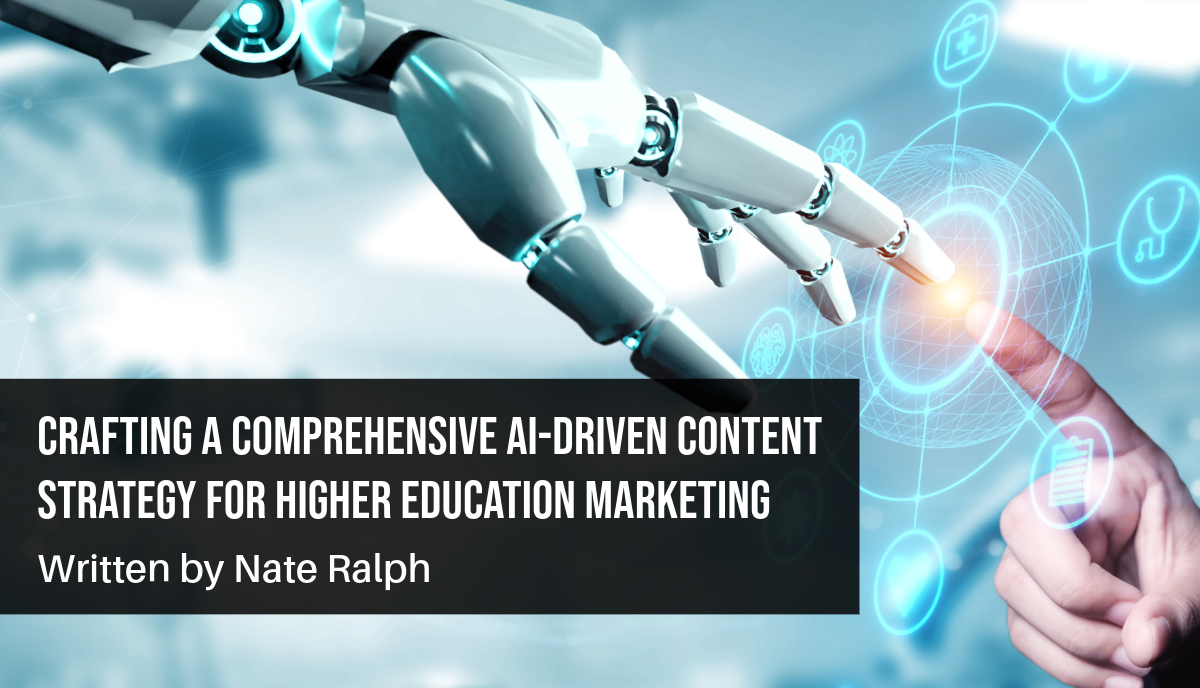
Crafting a Comprehensive AI-Driven Content Strategy for Higher Education Marketing

Crafting a Comprehensive AI-Driven Content Strategy for Higher Education Marketing

Artificial Intelligence (AI) is revolutionizing the landscape of higher education marketing, providing tools that streamline the creation and distribution of content. To harness these tools effectively, it’s crucial to understand their potential and how to implement them strategically.

Understanding AI-Generated Content

AI-generated content refers to materials produced by AI algorithms, such as written articles, marketing copy, and visuals. These algorithms can analyze data patterns and generate content with minimal human intervention, enhancing efficiency and consistency in content creation.

In the context of higher education, AI-generated content includes automated marketing materials, course descriptions, personalized student communications, and engagement tools. Universities and colleges use these strategies to create a lasting impression on prospective students.

Key Benefits of AI in Higher Education Marketing

Incorporating AI into higher education marketing strategies presents a myriad of benefits, fundamentally reshaping how institutions engage with their target audience. These advantages include the ability to tailor communication for more effective engagement, analyze data to refine marketing strategies, ensure content resonates with diverse demographics, and provide automated assistance through intelligent chatbots. Let’s explore these key benefits in detail:

AI’s integration into higher education marketing offers several advantages:

  • Personalized Communication: AI tailors messages to engage prospective students effectively.
  • Data Analysis: AI analyzes trends and behaviors to optimize marketing strategies.
  • Content Delivery: AI ensures content resonates with diverse audiences through targeted delivery.
  • Automated Assistance: AI-driven chatbots provide instant information, guiding students through the application process and answering queries.

Types of AI-Generated Content

The integration of AI technology in higher education marketing enables the creation of diverse and engaging content types. These include visually appealing graphics and images, interactive formats that encourage user participation, automated generation of social media posts, and optimized content for landing pages and blogs. Additionally, AI facilitates the personalization of email campaigns based on user data, as well as the development of immersive virtual tours. Compelling course descriptions further enhance the overall marketing strategy, capturing the attention of prospective students and encouraging further exploration.

Higher education marketers can utilize various forms of AI-generated content, including:

  • Visual Content: Graphics and images created by AI enhance visual appeal.
  • Interactive Content: Engaging formats that encourage user interaction.
  • Social Media Posts: Automated generation of posts for social media platforms.
  • Landing Pages and Blog Posts: Content optimized for engagement and SEO.
  • Email Campaigns: Personalized email content based on user data.
  • Virtual Tours: AI-powered tours that provide an immersive campus experience.
  • Course Descriptions: Compelling descriptions get prospects to read more.

Developing an AI-Generated Content Strategy

AI has the power to revolutionize content creation. The key to unlocking valuable AI-generated content lies in using the right prompts. Properly framing these prompts and utilizing the tools effectively is crucial.

When developing AI marketing strategies for higher education, keep the following components in mind:

Setting Clear Objectives and Goals

AI serves as a powerful tool, but it’s not a standalone solution. To utilize it effectively, you need clear objectives and goals to engage your audience. Determine whether you want AI to help generate ideas, create written content, produce images, or develop videos for your marketing campaigns. AI can also assist in repurposing existing content and optimizing it for SEO, enhancing your marketing and promotional efforts.

When defining your objectives and goals, consider the following:

  • Outline Desired Outcomes: Clearly specify the knowledge and skills students should acquire.
  • Set Quality Benchmarks: Establish standards for content quality to meet educational criteria.
  • Align Content with Goals: Ensure that AI-generated content supports your defined objectives.
  • Implement Feedback Loops: Regularly refine and improve AI-generated content based on feedback.
  • Address Ethical Concerns: Maintain academic integrity by addressing ethical considerations.

Understanding your purpose and the specific achievements you seek through AI-generated content is crucial.

Understanding the Target Audience

Knowing your target audience is vital for creating effective content in higher education. Tailoring content to students’ needs, preferences, and academic goals boosts engagement and enhances learning outcomes.

To understand your target audience for higher education marketing using AI tools, consider:

  • Demographic Analysis: Study the demographic characteristics of your audience.
  • Prior Knowledge Levels: Assess the existing knowledge base of your audience.
  • Learning Preferences: Identify how your audience prefers to learn.
  • Cultural Diversity: Recognize and respect cultural differences within your audience.
  • Language Proficiency: Account for varying levels of language skills.
  • Technological Familiarity: Gauge your audience’s comfort with technology.
  • Academic Goals: Understand the educational aspirations of your audience.

This comprehensive understanding ensures that your educational materials are relevant, accessible, and resonate with the diverse needs of the student body, thereby enhancing your lead generation efforts in higher education marketing.

Selecting the Right AI Tools and Platforms

AI tools allow knowledge workers to analyze data, make predictions, and perform tasks more efficiently. Before investing in an AI platform, consider these key factors:

  • Flexibility and Compatibility: Ensure the tool integrates smoothly with your existing systems.
  • Scalability: Look for tools that can handle deep learning and grow with your needs.
  • Budget: Make sure the cost aligns with your financial constraints.
  • Algorithms and Optimization: Choose tools with powerful algorithms and optimization capabilities.
  • Security and Compliance: Ensure robust security measures and regulatory compliance.
  • Pre-Built APIs: Look for tools with pre-built cognitive APIs to speed up implementation.
  • Third-Party Integration: Verify that the tool integrates with other platforms you use.
  • Customized Support: Opt for tools that offer tailored support services.
  • Transparent Pricing: Seek clear and straightforward pricing models.
  • Trial Period: Test the platform before committing to a purchase.

Consider your project’s specific needs, the learning curve, and future planning when selecting an AI platform.

Content Creation and Curation

In higher education marketing, effective content creation and curation are essential for attracting and retaining students. Tailor your content to highlight academic excellence, campus life, and career opportunities to engage prospective students.

Strategies include:

  • Creating Compelling Content: Develop blog posts, videos, and social media content that showcase unique aspects of your institution.
  • Curating Existing Content: Select and organize existing materials to build credibility and authority. A well-executed strategy positions your institution as a thought leader and fosters trust.

Writing AI-Generated Articles:

Use AI algorithms to generate written content. Leverage natural language processing to create coherent, contextually relevant articles, saving time and enhancing productivity.

Creating AI-Generated Visuals:

Utilize AI to generate images, graphics, or multimedia content. This enhances visual appeal and supports communication, ensuring efficiency and creativity in visual representation.

Quality Control and Human Oversight

In higher education content generation, quality control and human oversight are crucial. Human oversight is necessary to review, refine, and correct AI-generated content, ensuring it aligns with academic integrity.

Establish rigorous quality standards to maintain accuracy and meet educational objectives. This process helps mitigate biases, ethical issues, and content inaccuracies, balancing technological capabilities with human expertise.

As a higher-education marketer, it’s essential to ensure your content resonates with the target audience and meets high standards of relevance, reliability, and educational efficacy. Additionally, AI can suggest various methods and strategies to personalize your content effectively.

Ensuring Compliance and Ethical Considerations

While AI can boost productivity and creativity in higher education, it also raises ethical questions, such as the implications of machines mimicking human creativity and authorship.

Reliability and accuracy are paramount when using AI content-generation tools. Since these tools depend on algorithms and machine learning, there’s a risk of producing false or misleading information. Regular updates and rigorous testing can improve the reliability and accuracy of AI-generated content.

Ethical considerations for using AI content tools in higher education include:

  • Transparency, Disclosure, and Accountability: Clearly communicate the use of AI and be accountable for its outputs.
  • Data Privacy and Protection: Safeguard personal information used by AI tools.
  • Social and Cultural Implications: Be mindful of the social and cultural impact of AI-generated content.
  • Copyright Laws and Fair Use Doctrine: Adhere to copyright regulations and ensure fair use.
  • Plagiarism and Copyright Infringement: Avoid plagiarism and respect intellectual property rights.
  • Proper Attribution and Citation: Accurately attribute sources and provide proper citations.

By following industry standards and best practices, AI tools can achieve higher accuracy and reliability, enhancing their overall value.

Implementing an AI-Generated Content Strategy

Integrating an AI-generated content strategy in higher education marketing requires seamless coordination with existing efforts to boost engagement and communication. By utilizing AI to create customized content for diverse audiences, institutions can deliver personalized messages that resonate with prospective students, faculty, and stakeholders.

To refine strategies, it is crucial to measure and evaluate the performance of AI-generated content. Employing key performance indicators (KPIs) such as engagement rates, conversion metrics, and audience feedback ensures a data-driven approach. Continuous improvement and optimization, driven by analytics, allow higher education marketers to adapt dynamically, maintaining relevance and impact.

The Future of AI in Higher Education Marketing

AI is set to elevate higher education marketing strategies to new heights. Its future is multifaceted, addressing everything from personalized learning to operational efficiency. AI tools play a significant role in creating adaptive learning programs tailored to each student’s needs.

Personalized Learning Paths: Combining digital marketing with AI-generated content allows for educational materials tailored to individual needs, enhancing engagement and performance by offering a customized learning experience.

Chatbots for Student Support: AI-powered chatbots assist prospective and current students with inquiries, applications, and general support. They provide instant responses, improving efficiency and enhancing the overall student experience.

Predictive Analytics for Student Success: Utilizing machine learning algorithms, institutions can predict factors affecting student success, identifying at-risk students early. This proactive approach enables targeted interventions, improving retention rates and overall academic outcomes.

Final Thoughts

AI is revolutionizing higher education by employing data-driven strategies that engage students and enhance their academic journey. It disrupts administrative, teaching, learning, and research activities, transforming the future of education.

In higher ed marketing, an AI-generated content strategy not only improves outreach but also personalizes it, boosting student recruitment and enrollment. Understanding prospects more deeply allows for a nuanced grasp of their behavior, preferences, and needs.

By embracing AI, higher education institutions can leverage its potential for improvement across the board. With guidance from higher education marketing consultants, AI can help tailor lesson plans, assessments, and overall student experiences, driving significant advancements in education.