
Finding the Best SEO in St. Louis: An In-Depth Guide for Local Businesses to Dominate the Digital Landscape

Finding the Best SEO in St. Louis: An In Depth Guide for Local Businesses to Dominate the Digital Landscape

In the vibrant heart of the “Show-Me State,” St. Louis businesses are uniquely positioned for growth and success. But in today’s hyper-competitive digital marketplace, simply having a website is akin to having a billboard in the desert – it exists, but is anyone seeing it? To truly connect with your local customer base and drive meaningful growth, you need to be not just online, but visible. This is where the power of search engine optimization (SEO) comes into play, and finding the best SEO in St. Louis can be the single most important investment you make in your company’s future.

As a St. Louis-based SEO professional, I’ve witnessed firsthand the transformative impact of a well-executed, strategic SEO campaign. I’ve also seen the confusion, frustration, and wasted resources that can result when businesses partner with the wrong “expert.” This comprehensive guide is designed to demystify the world of SEO, cut through the industry jargon, and empower you to make a savvy, informed decision for your business.

What Does the “Best SEO” in St. Louis Really Mean?

“Best” is a subjective term, but in the realm of SEO, it should be defined by concrete, measurable results and a transparent, collaborative process. Here’s a deeper dive into what you should be looking for in a top-tier St. Louis SEO partner:

  • A Laser Focus on Local SEO: St. Louis is a city of diverse, tight-knit neighborhoods.1 A truly effective SEO strategy will go far beyond generic keywords and target the specific areas where your customers live, work, and play. Think “artisan bakery in Soulard,” “personal injury lawyer in Clayton,” or “HVAC repair in Chesterfield.” This granular, localized approach ensures that you’re reaching the most relevant and high-intent audience possible.
  • A Verifiable and Proven Track Record: Don’t be swayed by impressive-sounding presentations and vague promises. The best SEO professionals will have a portfolio of successful campaigns and be eager to share them. Ask for case studies, client testimonials, and examples of how they’ve helped other St. Louis businesses achieve their goals. The proof, as they say, is in the rankings, the traffic, and the return on investment (ROI).
  • A Holistic and Comprehensive Approach: SEO is not a one-trick pony. It’s a multifaceted discipline that requires a holistic strategy. This includes:
    • Technical SEO: Ensuring your website is technically sound and easily crawlable by search engines like Google.2
    • On-Page SEO: Optimizing your website’s content and structure to be as relevant and user-friendly as possible.3
    • Off-Page SEO: Building your website’s authority and credibility through high-quality backlinks, local citations, and a strong online reputation.4
  • Transparent and Actionable Reporting: You should never be in the dark about how your SEO campaign is performing. A trustworthy SEO partner will provide clear, easy-to-understand reports that track key performance indicators (KPIs) like organic traffic, keyword rankings, conversion rates, and lead generation.5 These reports should not only show you the data but also provide insights and recommendations for future strategy.6

The Pillars of a Winning St. Louis SEO Strategy

To truly understand the value of a comprehensive SEO campaign, it’s helpful to understand its core components:

  • Technical SEO: The Foundation of Your Online Presence: Think of technical SEO as the foundation of your house. Without a solid foundation, everything else will crumble. Technical SEO involves optimizing the technical aspects of your website to improve its crawling and indexing by search engines.7 Some key elements of technical SEO include:
    • Website speed and mobile-friendliness
    • XML sitemap creation and submission
    • Robots.txt file optimization
    • Structured data (schema) markup
    • SSL certificate implementation (HTTPS)
  • On-Page SEO: The Content That ConvertsOn-page SEO is all about optimizing the content on your website to make it as relevant and valuable as possible for both users and search engines.8 This includes:
  • In-depth keyword research: Identifying the terms and phrases your target audience is using to search for businesses like yours in St. Louis.
  • Compelling and informative content: Creating high-quality blog posts, service pages, and other content that answers your users’ questions and establishes you as an authority in your industry.9
  • Optimized title tags, meta descriptions, and header tags: These HTML elements help search engines understand what your content is about and entice users to click on your website in the search results.1
  • Off-Page SEO: Building Your Digital ReputationOff-page SEO refers to all the activities you do outside of your website to improve its authority and credibility.11 This includes:
  • High-quality link building: Acquiring backlinks from other reputable websites in your industry.
  • Local citations: Ensuring your business’s name, address, and phone number (NAP) are consistent across all online directories.
  • Online review management: Encouraging satisfied customers to leave positive reviews on platforms like Google, Yelp, and Facebook.
Choosing the Right SEO Partner in St. Louis: A Checklist for Success

Finding the right SEO partner is a critical business decision. Here’s a checklist to help you vet potential candidates and make an informed choice:

  • Do they have a deep understanding of the St. Louis market?
  • Do they have a transparent and collaborative approach?
  • Do they have a proven track record of success?
  • Do they offer a comprehensive range of SEO services?
  • Do they provide clear and actionable reporting?
  • Are they up-to-date on the latest SEO trends and algorithm changes?

Red Flags to Watch Out For:

  • Guarantees of #1 rankings: No one can guarantee a #1 ranking on Google.
  • A “secret sauce” or proprietary method: SEO is not magic; it’s a combination of proven strategies and best practices.
  • A lack of transparency: You should always know what your SEO partner is doing and why.
  • A focus on quantity over quality: When it comes to backlinks and content, quality is always more important than quantity.

The Future of SEO in St. Louis: What to Expect

The world of SEO is constantly evolving. Here are a few trends that are shaping the future of search and how they apply to St. Louis businesses:

  • The Rise of AI in Search: With the advent of AI-powered search engines, the way people find information is changing. A forward-thinking SEO strategy will focus on creating high-quality, authoritative content that satisfies both users and AI algorithms.14
  • The Increasing Importance of E-E-A-T: E-E-A-T stands for Experience, Expertise, Authoritativeness, and Trustworthiness.15 Google is placing an ever-increasing emphasis on these factors, so it’s more important than ever to create content that demonstrates your expertise and builds trust with your audience.
  • The Continued Dominance of Local Search: According to recent data, a significant percentage of mobile searches have local intent.16 For St. Louis businesses, this means that optimizing for local search is no longer optional – it’s essential for survival.

Your Partner in St. Louis SEO Success

Choosing the right SEO partner can be a daunting task, but it doesn’t have to be. I am dedicated to providing transparent, results-driven SEO services to businesses here in our hometown. I believe in building long-term partnerships and empowering my clients with the knowledge and strategies they need to succeed online. I don’t just want to be your SEO provider; I want to be your trusted partner in growth.

If you’re ready to take your St. Louis business to the next level, I invite you to reach out for a free, no-obligation consultation. Let’s have a conversation about your business goals and how a tailored SEO strategy from a local expert can help you achieve them.


Double Tapping Your Zombie Pages to Kill Index Bloat

Double Tap Zombie Pages for Index Bloat

Zombies may be the most overplayed and trite concept of the modern era in entertainment, but that won’t keep me from using the reference. When referring to web pages, zombies are those pages that your site doesn’t need. Zombie pages are the lifeless pieces of your site that just won’t die.

Why would a person have boring and lifeless content on their website? Often it is unintentional, but sometimes we just become content hoarders, unable to let bad content die. A strategic zombie hunt can eliminate your index bloat and get put your vibrant, living content back in the limelight where it belongs.

What are Zombie Pages?

There are many different types of web pages that can become useless, or devalued over time. Some may even start as fairly useless, or harmful, even. Here are some of the more common types of zombie pages that may be contributing to your SEO problems through index bloating.

Old Content

Many of the pages that are considered zombies are just old. They may have been written with an old strategy in mind, or just simply became outdated over the years. For instance, if you are wanting your website to rank for terms related to the newest internet software available, having 4,000 pages of content written about software from 1998 are probably not going to help you in your endeavors. Pruning that content out will help the newer content from being diluted with old, irrelevant content.

Mistakenly Published Content

A zombie hunt I recently went on was all about the oops factor. Our site was set to create a stock photo page for every photo that was saved as media on the site. As you can imagine, this thin content wasting our Google crawl budget was NOT a good thing. Thankfully, problems like this can often be rectified by a simple, global change to the site. The rest is just waiting for Google to take notice of your zombie slaughter.

Duplicate Content

Many zombie pages are duplicates of other pages on your site. If you have duplicate content on your site without attributing it with the rel=canonical tag in the head, it can impact your search results. If you have multiple occurrences of “appreciably similar” content pieces, as Google calls them, search engines have a hard time determining which version is most relevant for a given search query.

What is Index Bloat?

When you have a bunch of unnecessary pages being indexed on your site, Google and other retrieval systems have to spend more time processing your content than necessary. Think of your top content as needles and the zombie pages as hay in a haystack. If you want Google to find the needles, having less hay in your haystack REALLY helps.

Bloating your site with useless content can lead to a poor user experience, too. While that in itself is bad, Google will pick up on poor user metrics and consider that data when making ranking decisions.

Identifying Zombie Pages

So what do zombie pages look like? Are they drooling while slowly mumbling something about brains? Not exactly, but nearly as simple as that. Use your metrics to identify your low quality pages. Here are some metrics to consider:

  • Total visits (Pageviews)
  • Bounce Rate
  • Average Time on Page
  • Unique Pageviews
  • Pages per session (Pages/Session)
  • Exit rate

If a page has few visitors, but has great semantic SEO value with rich content, you may want to keep it. Also, consider the pages per session. If a page tends to keep visitors on the site, it may be worth keeping, too.

Stay down, zombie!

Kill Your Zombie Pages with the Double Tap Method

What is the best way to get rid of zombie pages? Why, the Double Tap method, of course. Just as the characters in Zombieland use the double tap method to ensure zombies stay dead, we can use a similar technique to get kill zombie pages and have engines de-index them once and for all.

Quarantine and Kill Your Zombie Pages

How do you handle the undead? Quarantine them! The same is true with undead, useless web pages. Once you identify said pages, you can do several things. Here are some of them:

Delete Old Content

Want to make sure that zombie stays down? Delete the page and any associated media files that aren’t needed. Google can’t index what isn’t there.

Cannibalize the Content

Is there some value left in that undead piece you wrote in the 90s? Don’t kill it, cannibalize it! Take one or more pieces of content and revamp or combine them to give them new life.

Mark as No-Index

Marking pages as “noindex” in your robots file can be an effective way to keep the content from search engine indices. There are plugins that make this a simple process for those less tech-savvy.

Double Tap the Zombies for Quick De-Indexing

How do you take a zombie down and keep them down? The Double Tap SEO method, of course. After you’ve deleted the content, or marked it as “no-index,” their SERP “ghosts” will remain in your search results until the search engine knows its gone.

To hasten your zombies final demise, you can double tap them using Google’s “Remove URL Tool.” This tells Google that your page needs to be removed from their index ASAP. If you have thousands of pages, this may be too much work, but if you do this, you’ll see those pages removed from your results much faster. Otherwise, it could take weeks for the Google bots to get to it.

Don’t Be Gun Shy When it Comes to Zombie Pages

The key to an effective website pruning is to use your head and not your heart. Look at the metrics and consider the value of each page objectively. If you can’t stand to delete something, just unpublish it until you find a purpose for it.

Index bloat can really bog your site down and keep it from realizing its true potential. Once your star content is allowed to shine, you’ll be glad you double tapped.

Entomophagy: The Science and Art of Eating Insects

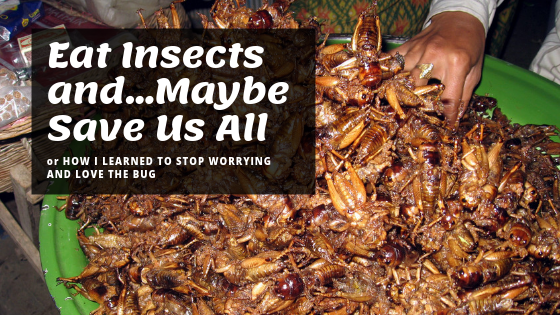
Entomophagy - Eat Insects and mayhbe save us all

Current food strategies in the U.S. are contributing to myriad issues from global warming to obesity.  There have been many solutions proposed, and some implemented over the years with little success.  In this essay I’d like to explore using insects as food in order to find solutions for many of the problems associated with the production, distribution, consumption, and disposal of food within our current system. 

The average American consumes 224 pounds of meat annually. (CME Group, 2011)  This meat is usually the products of beef, pork, and chicken.  Fish, turkey, veal and lamb make up significantly smaller portions of this total.  It can range from 4.7 to 20 pounds of feed to increase a cow’s weight by one pound. (National Research Council, 2000)  Hogs require about four pounds of feed to gain one pound of mass (Reese, Liptrap, Parker, Cromwell, & Stahly, 1985), and chickens have a conversion ratio of 2-3 pounds feed to one pound gained. (The Livestock, Environment and Development Initiative, 2006) 

The plant products on which these animals feed require huge amounts of land for their production.  Methods used to grow them are environmentally harmful, require large amounts of energy, and use many resources in an unsustainable manner. 

Efficiency of Insects

Many insects have food conversion ratios of less than two pounds of feed to one pound of weight gained.  If we incorporated bugs into our current food systems for protein, we could decrease the amount of land needed to create feed for production animals. 

On top of their efficient food conversion, insects can feed on pre-supermarket waste such as bean husks so they wouldn’t compete with existing animal production needs.  Some insects can even feed on non-food waste, such as paper.  Both these factors would contribute to lessening the total amount of land needed to feed our food animals and reduce greenhouse gas emissions. 

Aside from needing less food in order to reach “slaughter age,” insects can be raised using space far more efficiently and less environmentally harmful than modern cattle.  The total amount of land degradation, including from water erosion, wind erosion, chemical degradation, and physical degradation associated with raising cattle across the globe is 19.65 million square kilometers, which is about 13% of the total land on earth. (The Livestock, Environment and Development Initiative, 2006)  We cannot continue this trend much longer.  Insects need only warmth, water and food to grow, so they can be grown nearly everywhere. 

Abandoned warehouses and buildings in and around cities could be repurposed to house local production facilities.  Insects can be grown in tight spaces in vertical modular cabinet-like structures.  A current startup is planning on incorporating both of these ideas into their business model. 

Entomophagy-Eat-Insect-Nate-Ralph

The Insect Consumption Process

Ento (short for entomophagy, the practice of eating bugs) is a company in London that is capitalizing on this yet untapped resource in western cultures.  They are using modern cuisine techniques to make visually appealing, delicious insect dishes.  Many are unrecognizable as insect products, and resemble something more like a sushi platter. 

Part of Ento’s plan is to play on the current entomophagy taboo in western cultures by using peer pressure to get people to try their products.  Since this concept is new to western cultures, packages would inform the consumer on appropriate serving size, serving suggestions, and nutrition content.  They have designs for scalable, modular cabinet systems for production that can be easily transported.  These systems could be used efficiently in a variety of existing abandoned structures. 

Urban insect farms can be personal or community endeavors as well.  Every major city has laws against keeping farm animals within city limits, but few, if any, have restrictions on raising edible insects.  Anyone with space under a table or desk can grow bugs.   Community insect farming projects could help to bring local communities together and ensure local economic growth.  People could exchange different species like tomato growers do with heirloom variety seeds.  We would reduce food miles dramatically and help people obtain food security by employing these techniques.  

Insects provide high quality protein and supplement the diet significantly with minerals and vitamins that are in short supply in developing nations.  Most bugs are a good source of essential fatty acids, some containing more than oily fish. (DeFoliart, 1992)  If not used as a direct food source for humans, insects could be fed to animals to increase their levels of Omega-3s and other essential fatty acids.  We would then benefit by eating those animals.  It is more efficient to eat the insects directly because after having been consumed by the cattle, only about 10% of its total energy will be passed to the next consumer.  

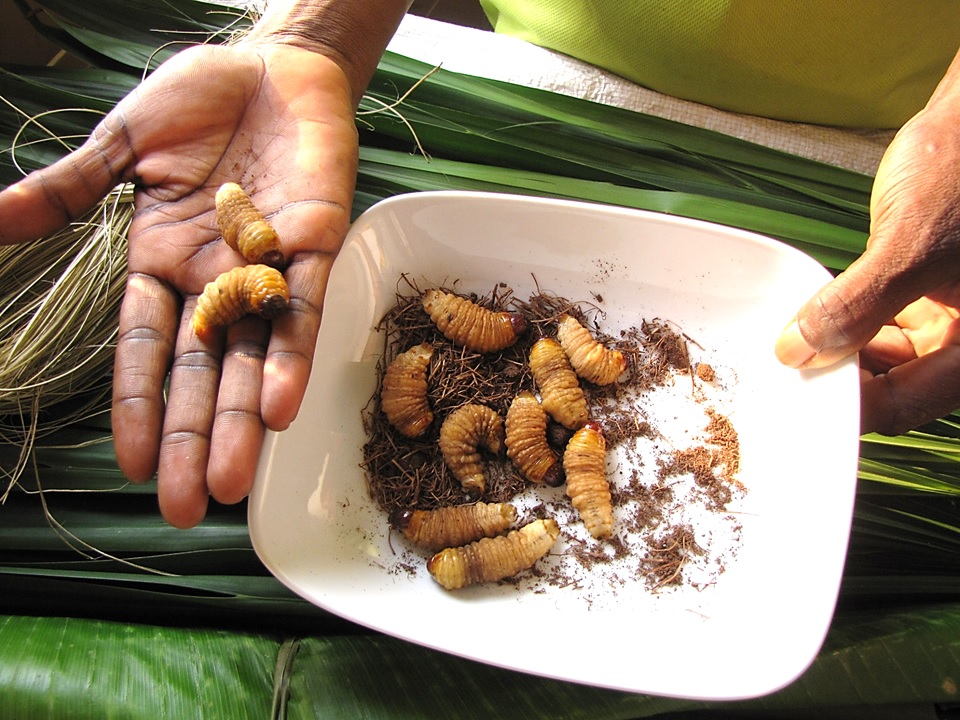
Humans have been eating insects for thousands of years.  Aristotle recorded how the Greeks enjoyed eating the cicada, and Herodotus and Pliny described such delicacies as the locust and the larvae of the longicorn beetle. (Morris, 2008) There are at least 1386 known edible varieties consumed by humans (Verkerk, Tramper, van Trijp, & Martens, 2007), so this is not a new phenomenon.  It is, however, a bit foreign to Americans.  Fear Factor was a reality television show dedicated in large part to forcing people to break this taboo, and those that watched contestants chew on caterpillars and crickets squealed painfully in disgust.  Ironically, these participants were rewarded for eating what people from some cultures simply call “food.”

Where did this insect aversion come from in Western culture?  There is no innate dislike for insects in humans.  It’s possible it came from the ‘civilizing process’ stemming from aristocratic court, which began defining etiquette in ways that made insect eating anti-social. (Morris, 2008)  Eating insects therefore became ‘uncivilized’ and deemed primitive. 

Will Americans ever eat insects?  Many Americans eat a bug product every day and don’t even know it.  Female Cochineal bugs contain a red chemical that is used as a dye in many food products.  Starbucks uses it in their strawberry frappuccinos (Jaslow, 2012), Nestle’ colors their red Smarties with it (Barton, 2007), and many other companies us it in a variety of food products.  Both Starbucks and Nestlé are phasing the chemical out of their products, but it is here to stay in many others. 

Aside from Ento and more clandestine approaches to entomophagy, it is actually becoming a small trend in gourmet cuisine.  The Brooklyn Kitchen has several bug dishes on their menu and hosts sell-out dinners composed of mostly insects. (Lazarowitz, 2010)  Dishes are starting to pop up around the country, and distribution is getting a little better.

Potential Risks

Expanding insect farming in the United States could lead to increased incidents of invasive species.  With almost 2,000 varieties of edible insects to choose from, we’re bound to run into some that find environments to thrive in.  This could cause unpredictable amounts of environmental harm for years or decades.  If a mega-farm filled with Aristotle’s cicadas suddenly evacuated its residents, the insects could eat nearly every piece of vegetation for miles.  Safety measures would have to be enacted and followed to keep incidents from happening.  If the process were gradual enough, regulators would stay ahead.

An infrastructure would need to be in place for the success of American insect farms.  Food safety and sanitation protocols would have to be devised and maintained.  Growth in this industry is likely to be slow enough for the infrastructure and protocols to grow up around it for some years to come.

Insect protein could be a viable option for our food needs in the near future.  They can eat many waste products that traditional cattle cannot and convert that food into body mass at a rate better than cows, pigs, and chickens.  The nutritional aspects of insects are better than those of traditional meat animals.  Insects can be raised nearly anywhere, including existing abandoned structures for a good use of urban space.  The biggest obstacle for large-scale implementation is the taboo associated with eating six-legged creatures in contemporary American society.  If trends in population growth and food preferences continue, we may have to get over it out of necessity. 

Bibliography

Barton, L. (2007, May 14). Veggies beware! Retrieved November 6, 2012, from The Guardian: http://www.guardian.co.uk/lifeandstyle/2007/may/15/foodanddrink.uk

CME Group. (2011). Daily Livestock Report. Steve Meyer and Len Steiner.

DeFoliart, G. (1992). Insects as human food. Crop Protection, 395-399.

Jaslow, R. (2012, March 27). Starbucks Strawberry Frappuccinos dyed with crushed up cochineal bugs, report says. Retrieved 11 6, 2012, from CBS News: http://www.cbsnews.com/8301-504763_162-57405140-10391704/starbucks-strawberry-frappuccinos-dyed-with-crushed-up-cochineal-bugs-report-says/

Lazarowitz, E. (2010, September 14). Meal at Brooklyn Kitchen might bug you: caterpillars, mealworms and moth larvae are on the menu. Retrieved November 7, 2012, from New York Daily News: http://articles.nydailynews.com/2010-09-14/local/27075258_1_insect-cuisine-eat-bugs-larvae

Morris, B. (2008). Insects as food among hunter gatherers. Anthropology Today, 6-8.

National Research Council. (2000). Nutrient Requirements of Beef Cattle. Washington, D.C.: National Academy Pres.

Reese, D. E., Liptrap, D. O., Parker, G. R., Cromwell, G. L., & Stahly, T. S. (1985). Factors Affecting Feed Conversion in Growing-Finishing Swine. Lexington, KY: Univeristy of Kentucky.

The Livestock, Environment and Development Initiative. (2006). Livestock’s Long Shadow. Rome, Italy: Food and Agriculture Organization of the United Nations.

Verkerk, M., Tramper, J., van Trijp, J. M., & Martens, D. (2007). Insect cells for human food. Science Direct, 25 198-202.