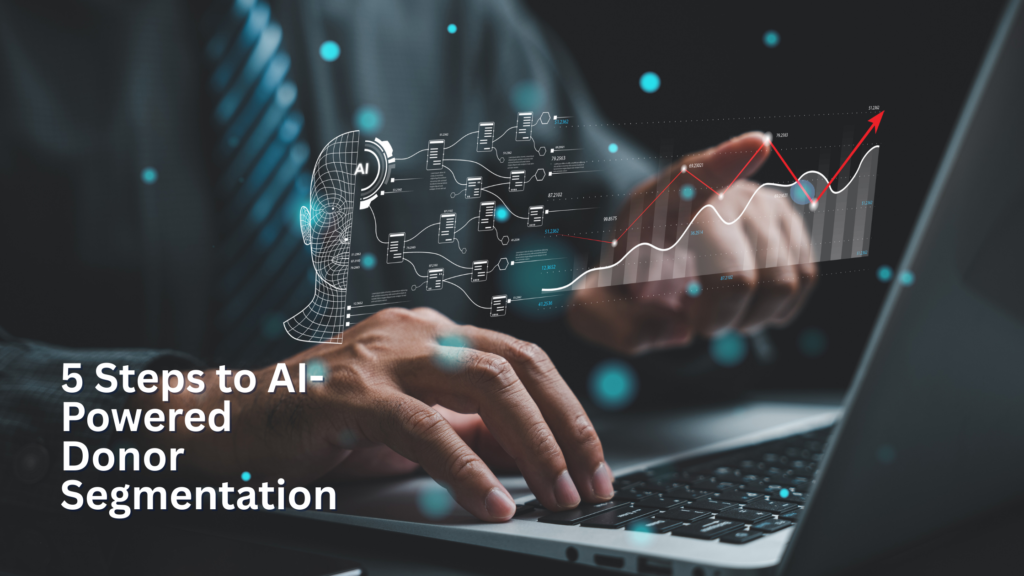
5 Steps to AI-Powered Donor Segmentation

5 Steps to AI-Powered Donor Segmentation

I. The Living Archive: Sanctifying the Source

The profound tragedy of modern philanthropy is rarely a lack of generosity; rather, it is the degradation of the vessel meant to hold it. Most Constituent Relationship Management (CRM) systems are treated like digital attics—cluttered, unindexed, and haunted by the ghosts of “Duplicate Entry” past. Before any artificial intelligence can synthesize patterns or offer a semblance of prophecy, this Living Archive must first be purged of its administrative impurities. If we feed an algorithmic model a diet of inconsistent naming conventions and fragmented “Gift Sources,” we are not building a sophisticated strategy; we are simply automating our own hallucinations.

Data hygiene, therefore, is the unsung liturgy of the digital age. Before we can genuinely connect with a donor, we must ensure their records are pristine—auditing platforms like Salesforce NPC or Bloomerang to bridge the gap between human error and machine precision. This requires standardizing campaign tags and rigorously encrypting Personally Identifiable Information (PII). Treating your data with this level of reverence is, fundamentally, an act of empathy. It is the acknowledgement that behind every disorganized decimal point is a human being who has entrusted you with their resources. Only when the archive is meticulously clean can the AI-layer begin its work.

II. From Autopsy to Oracle: The Predictive Pivot

Traditional donor segmentation, built on the venerable “RFM” (Recency, Frequency, Monetary) framework, is essentially an autopsy. We look at what happened last quarter, mourn the attrition of lapsed donors, and hope the institutional “gut feeling” holds true for the next gala. This descriptive approach traps organizations in a reactive cycle. In the era of the Living Archive, we pivot from the historian to the oracle. Standard segmentation tells you what a donor did; predictive analytics anticipates what they will do next.

By orchestrating tools like DonorSearch AI or Gravyty, we can assign a “Propensity to Give” score to every individual in the ecosystem. This shifts the organizational gaze from rear-view tracking to forward-looking clairvoyance. We cease asking how much someone gave three years ago and start calculating their mathematical alignment with future campaigns.

The true brilliance of this predictive model lies in uncovering the “Lapsed-Likely” segment. These are the supporters who have fallen silent over the last six months, slipping beneath the radar of standard queries, yet whose behavioral DNA perfectly mirrors your most devoted, long-term champions. AI rescues these individuals from obscurity, allowing you to re-engage them right before their connection to your cause undergoes permanent atrophy.

III. Behavioral Persona Mapping: The Anatomy of Intent

When we reduce human generosity to mere transaction sizes, we insult the complexity of the philanthropic impulse. Artificial intelligence allows us to transcend this crude taxonomy by grouping donors not by how much they give, but by why they give. We begin to map the psychological anatomy of our archive, parsing the subtle signals of digital body language to construct multidimensional personas.

Consider the “Social Advocate.” Their financial contributions might be modest, but their engagement is a torrential downpour of shared posts, forwarded emails, and grassroots evangelism. Traditional models might ignore them; AI recognizes them as the circulatory system of your public awareness. Conversely, we have the “Quiet Major.” This archetype exhibits zero social media footprint and rarely opens a newsletter, yet possesses a high net worth and a history of sporadic, five-figure endowments. They do not want a personalized hashtag; they want a quiet, impeccably researched impact report.

And then there is the “Next-Gen Sustainer”—the mobile-first, values-driven contributor who prefers the frictionless immediacy of SMS links and Venmo transfers. By allowing machine learning to cluster these personas based on behavioral intent, we stop treating our donor base as a monolith and start treating it as a complex, vibrant community.

IV. Hyper-Personalized Content Loops: Speaking the Native Tongue

Once we have mapped the distinct personas residing within our archive, the nature of our communication must radically adapt. Sending a single, uniform appeal letter to the Social Advocate, the Quiet Major, and the Next-Gen Sustainer is akin to speaking one language to a multilingual crowd—you will inevitably alienate two-thirds of the room. We must use our newly defined segments to trigger automated, hyper-personalized content loops that speak to the specific “Why” of each donor.

Implementation in this phase requires tools like Momentum or Funraise AppealAI. These systems ingest the core narrative of your campaign and dynamically generate nuanced variations tailored to each specific persona. For the Social Advocate, the prose is urgent, shareable, and community-focused. For the Quiet Major, the language pivots to formal, data-driven stewardship and legacy building. The AI does not replace the human voice of the organization; rather, it acts as a masterful translator, ensuring that the emotional core of your message resonates perfectly with the psychological frequency of the recipient.

V. Real-Time Re-Segmentation: The Breathing Archive

The most profound paradigm shift in AI-powered fundraising is the realization that segmentation is no longer a quarterly boardroom presentation. It is a living, breathing process. Human interests are not static; they ebb, flow, and pivot based on the cultural zeitgeist and personal evolution. If our data models remain rigid, they will quickly become obsolete.

To maintain the vitality of the archive, we must establish real-time “Triggers.” Imagine a long-standing general supporter who suddenly begins interacting exclusively with content related to ocean conservation. In a manual system, this shift goes unnoticed until a year-end review. In our AI-enabled ecosystem, interacting with three environmental-focused posts in a single month acts as a tripwire.

The machine learning model instantly and automatically reclassifies this individual, moving them into the “Climate Champion” segment. Their next communication is no longer a generic newsletter, but a targeted update on your marine initiatives. This is the ultimate promise of data-driven stewardship: an organization that listens so intently, and adapts so fluidly, that the donor feels seen, understood, and deeply valued in real-time.
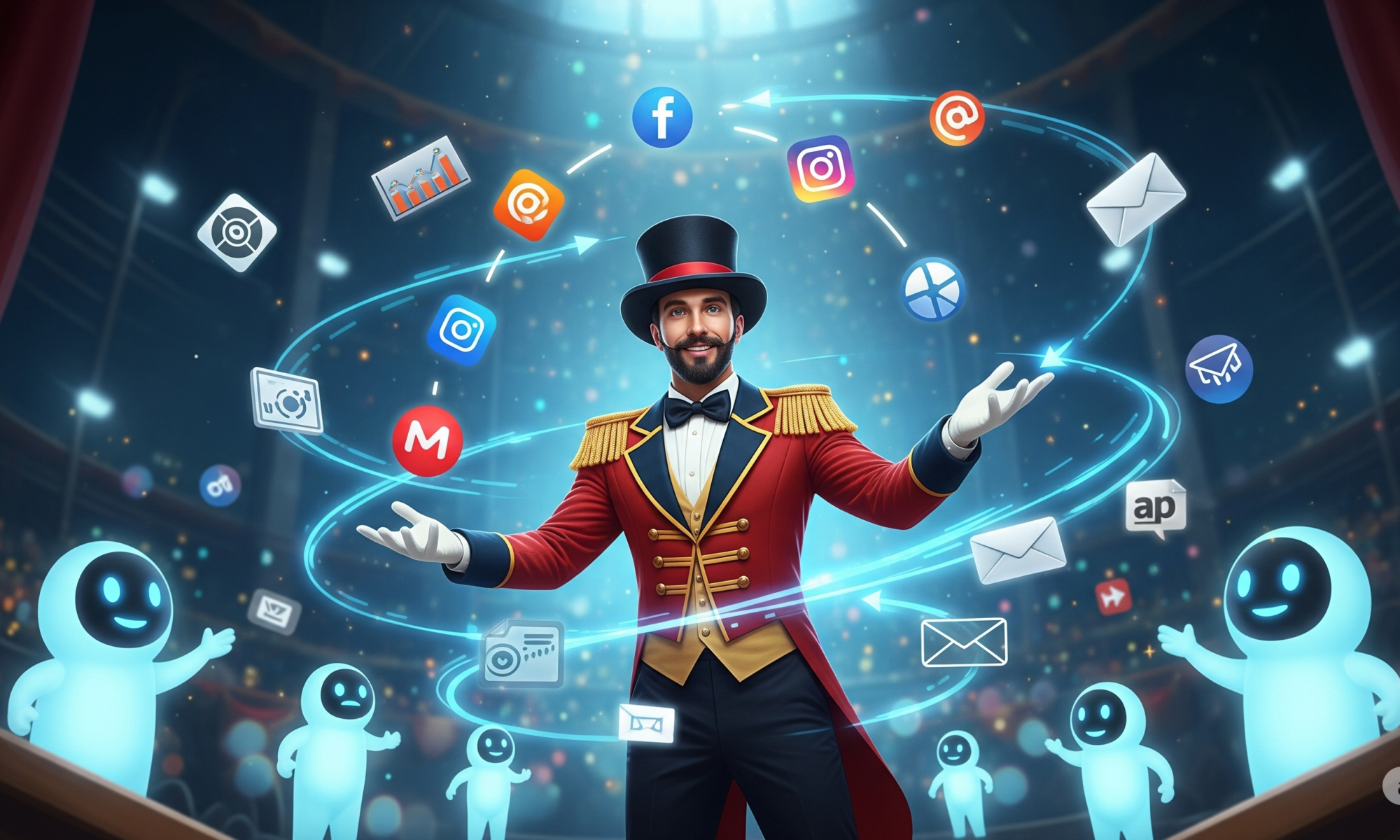
Stop Juggling Chainsaws! How AI Agentic Workflows Give Marketing Directors a Superpowered Third (and Fourth, and Fifth) Arm

Stop Juggling Chainsaws! How AI Agentic Workflows Give Marketing Directors a Superpowered Third (and Fourth, and Fifth) Arm

Okay, Director of Marketing, let’s be honest. Some days, doesn’t your job feel less like strategic leadership and more like a chaotic circus act? You’re juggling flaming torches (new campaigns), spinning plates (social media), taming lions (competitor analysis), and trying to sell popcorn (actually, you know, your products/services) – all while keeping a smile plastered on your face for the audience (your CEO and sales team). It’s a lot.

What if I told you there’s a way to not just get more hands, but super-powered, intelligent, and endlessly energetic ones? Enter AI agentic workflows, your new favorite behind-the-scenes crew.

Think of yourself as the Ringmaster of this incredible marketing circus. You’ve got the vision, the strategy, the understanding of what wows the crowd. But instead of desperately trying to train a troupe of well-meaning but sometimes fumbling human assistants for every single task, you now have access to a team of highly specialized AI agents.

What in the Big Top are AI Agentic Workflows?

Imagine this: you need to launch a new product. Instead of manually briefing a writer, then a designer, then a social media manager, then an ads specialist, all while chasing approvals and collating feedback, you deploy an AI agentic workflow.

  • Your “Scout” Agent: This AI whiz kid dives deep into market research, competitor messaging, and current trends with lightning speed. It uncovers insights you’d spend weeks digging for, identifying the perfect audience and the watering holes where they congregate online.
  • Your “Wordsmith” Agent: Armed with the Scout’s intel, this agent drafts compelling ad copy, blog posts, email sequences, and social media captions, all tailored to different platforms and audience segments. It can even A/B test headlines faster than a speeding trapeze artist.
  • Your “Visionary” Agent: Need visuals? This AI can generate mood boards, suggest imagery, or even create initial design mockups for your campaigns, giving your human designers a fantastic head start.
  • Your “Scheduler” Agent: This ultra-organized agent takes all that brilliant content and schedules it across all your chosen platforms, ensuring optimal timing and reach. No more missed posts or frantic last-minute scrambles.
  • Your “Analyst” Agent: As the campaign runs, this agent diligently tracks performance metrics in real-time. It doesn’t just report numbers; it spots trends, identifies what’s resonating (and what’s flopping), and even suggests optimizations. It’s like having a data scientist who never sleeps and speaks plain English.

From Juggling Chainsaws to Conducting an Orchestra

With AI agentic workflows, you, the Marketing Director, transition from a stressed-out, multi-tasking juggler to a strategic conductor.

  • Be More Efficient? Absolutely. Repetitive, time-consuming tasks get automated. Your team is freed up from the grunt work to focus on higher-level strategy, creative brainstorming, and building those crucial human connections. Think of the hours reclaimed!
  • Be More Effective? You Bet. These AI agents are data-driven. They learn, adapt, and optimize based on real-time feedback. This means campaigns that hit harder, resonate deeper, and deliver better ROI. No more throwing spaghetti at the wall and hoping it sticks.
  • Achieve Pinpoint Personalization? It’s Here. Imagine crafting hyper-personalized customer journeys at scale. AI agents can help segment audiences with incredible granularity and tailor messaging accordingly, making your audience feel truly seen and understood.
  • Boost Creativity? Surprisingly, Yes! By handling the mundane, AI workflows free up your team’s brainpower for innovation. Plus, the insights and starting points generated by AI can actually spark new creative avenues you hadn’t considered.
  • Make Smarter Decisions, Faster? That’s the Goal. With comprehensive data and intelligent analysis at your fingertips, you can make informed strategic decisions with greater confidence and speed. No more gut feelings disguised as strategy.

The Future Isn’t Scary, It’s Efficient

Adopting AI agentic workflows isn’t about replacing your talented human team; it’s about augmenting them, empowering them to do their best work. It’s about transforming your marketing department from a frantic flurry of activity into a well-oiled, strategic powerhouse.

So, are you ready to put down the juggling chainsaws and pick up the conductor’s baton? It’s time to let AI agentic workflows help you orchestrate your most successful marketing performances yet. The crowd is waiting.

Finding the Best SEO in St. Louis: An In-Depth Guide for Local Businesses to Dominate the Digital Landscape

Finding the Best SEO in St. Louis: An In Depth Guide for Local Businesses to Dominate the Digital Landscape

In the vibrant heart of the “Show-Me State,” St. Louis businesses are uniquely positioned for growth and success. But in today’s hyper-competitive digital marketplace, simply having a website is akin to having a billboard in the desert – it exists, but is anyone seeing it? To truly connect with your local customer base and drive meaningful growth, you need to be not just online, but visible. This is where the power of search engine optimization (SEO) comes into play, and finding the best SEO in St. Louis can be the single most important investment you make in your company’s future.

As a St. Louis-based SEO professional, I’ve witnessed firsthand the transformative impact of a well-executed, strategic SEO campaign. I’ve also seen the confusion, frustration, and wasted resources that can result when businesses partner with the wrong “expert.” This comprehensive guide is designed to demystify the world of SEO, cut through the industry jargon, and empower you to make a savvy, informed decision for your business.

What Does the “Best SEO” in St. Louis Really Mean?

“Best” is a subjective term, but in the realm of SEO, it should be defined by concrete, measurable results and a transparent, collaborative process. Here’s a deeper dive into what you should be looking for in a top-tier St. Louis SEO partner:

  • A Laser Focus on Local SEO: St. Louis is a city of diverse, tight-knit neighborhoods.1 A truly effective SEO strategy will go far beyond generic keywords and target the specific areas where your customers live, work, and play. Think “artisan bakery in Soulard,” “personal injury lawyer in Clayton,” or “HVAC repair in Chesterfield.” This granular, localized approach ensures that you’re reaching the most relevant and high-intent audience possible.
  • A Verifiable and Proven Track Record: Don’t be swayed by impressive-sounding presentations and vague promises. The best SEO professionals will have a portfolio of successful campaigns and be eager to share them. Ask for case studies, client testimonials, and examples of how they’ve helped other St. Louis businesses achieve their goals. The proof, as they say, is in the rankings, the traffic, and the return on investment (ROI).
  • A Holistic and Comprehensive Approach: SEO is not a one-trick pony. It’s a multifaceted discipline that requires a holistic strategy. This includes:
    • Technical SEO: Ensuring your website is technically sound and easily crawlable by search engines like Google.2
    • On-Page SEO: Optimizing your website’s content and structure to be as relevant and user-friendly as possible.3
    • Off-Page SEO: Building your website’s authority and credibility through high-quality backlinks, local citations, and a strong online reputation.4
  • Transparent and Actionable Reporting: You should never be in the dark about how your SEO campaign is performing. A trustworthy SEO partner will provide clear, easy-to-understand reports that track key performance indicators (KPIs) like organic traffic, keyword rankings, conversion rates, and lead generation.5 These reports should not only show you the data but also provide insights and recommendations for future strategy.6

The Pillars of a Winning St. Louis SEO Strategy

To truly understand the value of a comprehensive SEO campaign, it’s helpful to understand its core components:

  • Technical SEO: The Foundation of Your Online Presence: Think of technical SEO as the foundation of your house. Without a solid foundation, everything else will crumble. Technical SEO involves optimizing the technical aspects of your website to improve its crawling and indexing by search engines.7 Some key elements of technical SEO include:
    • Website speed and mobile-friendliness
    • XML sitemap creation and submission
    • Robots.txt file optimization
    • Structured data (schema) markup
    • SSL certificate implementation (HTTPS)
  • On-Page SEO: The Content That ConvertsOn-page SEO is all about optimizing the content on your website to make it as relevant and valuable as possible for both users and search engines.8 This includes:
  • In-depth keyword research: Identifying the terms and phrases your target audience is using to search for businesses like yours in St. Louis.
  • Compelling and informative content: Creating high-quality blog posts, service pages, and other content that answers your users’ questions and establishes you as an authority in your industry.9
  • Optimized title tags, meta descriptions, and header tags: These HTML elements help search engines understand what your content is about and entice users to click on your website in the search results.1
  • Off-Page SEO: Building Your Digital ReputationOff-page SEO refers to all the activities you do outside of your website to improve its authority and credibility.11 This includes:
  • High-quality link building: Acquiring backlinks from other reputable websites in your industry.
  • Local citations: Ensuring your business’s name, address, and phone number (NAP) are consistent across all online directories.
  • Online review management: Encouraging satisfied customers to leave positive reviews on platforms like Google, Yelp, and Facebook.

Choosing the Right SEO Partner in St. Louis: A Checklist for Success

Finding the right SEO partner is a critical business decision. Here’s a checklist to help you vet potential candidates and make an informed choice:

  • Do they have a deep understanding of the St. Louis market?
  • Do they have a transparent and collaborative approach?
  • Do they have a proven track record of success?
  • Do they offer a comprehensive range of SEO services?
  • Do they provide clear and actionable reporting?
  • Are they up-to-date on the latest SEO trends and algorithm changes?

Red Flags to Watch Out For:

  • Guarantees of #1 rankings: No one can guarantee a #1 ranking on Google.
  • A “secret sauce” or proprietary method: SEO is not magic; it’s a combination of proven strategies and best practices.
  • A lack of transparency: You should always know what your SEO partner is doing and why.
  • A focus on quantity over quality: When it comes to backlinks and content, quality is always more important than quantity.

The Future of SEO in St. Louis: What to Expect

The world of SEO is constantly evolving. Here are a few trends that are shaping the future of search and how they apply to St. Louis businesses:

  • The Rise of AI in Search: With the advent of AI-powered search engines, the way people find information is changing. A forward-thinking SEO strategy will focus on creating high-quality, authoritative content that satisfies both users and AI algorithms.14
  • The Increasing Importance of E-E-A-T: E-E-A-T stands for Experience, Expertise, Authoritativeness, and Trustworthiness.15 Google is placing an ever-increasing emphasis on these factors, so it’s more important than ever to create content that demonstrates your expertise and builds trust with your audience.
  • The Continued Dominance of Local Search: According to recent data, a significant percentage of mobile searches have local intent.16 For St. Louis businesses, this means that optimizing for local search is no longer optional – it’s essential for survival.

Your Partner in St. Louis SEO Success

Choosing the right SEO partner can be a daunting task, but it doesn’t have to be. I am dedicated to providing transparent, results-driven SEO services to businesses here in our hometown. I believe in building long-term partnerships and empowering my clients with the knowledge and strategies they need to succeed online. I don’t just want to be your SEO provider; I want to be your trusted partner in growth.

If you’re ready to take your St. Louis business to the next level, I invite you to reach out for a free, no-obligation consultation. Let’s have a conversation about your business goals and how a tailored SEO strategy from a local expert can help you achieve them.